
A CO₂ laser can cut many nonmetal materials, including plywood, solid wood, MDF, acrylic, paper, cardboard, and suitable leather and fabrics. How thick you can cut depends on your machine, the material, and your settings.
Start with materials sold specifically for laser processing. A familiar appearance does not guarantee that a sheet is suitable—or safe—to cut.
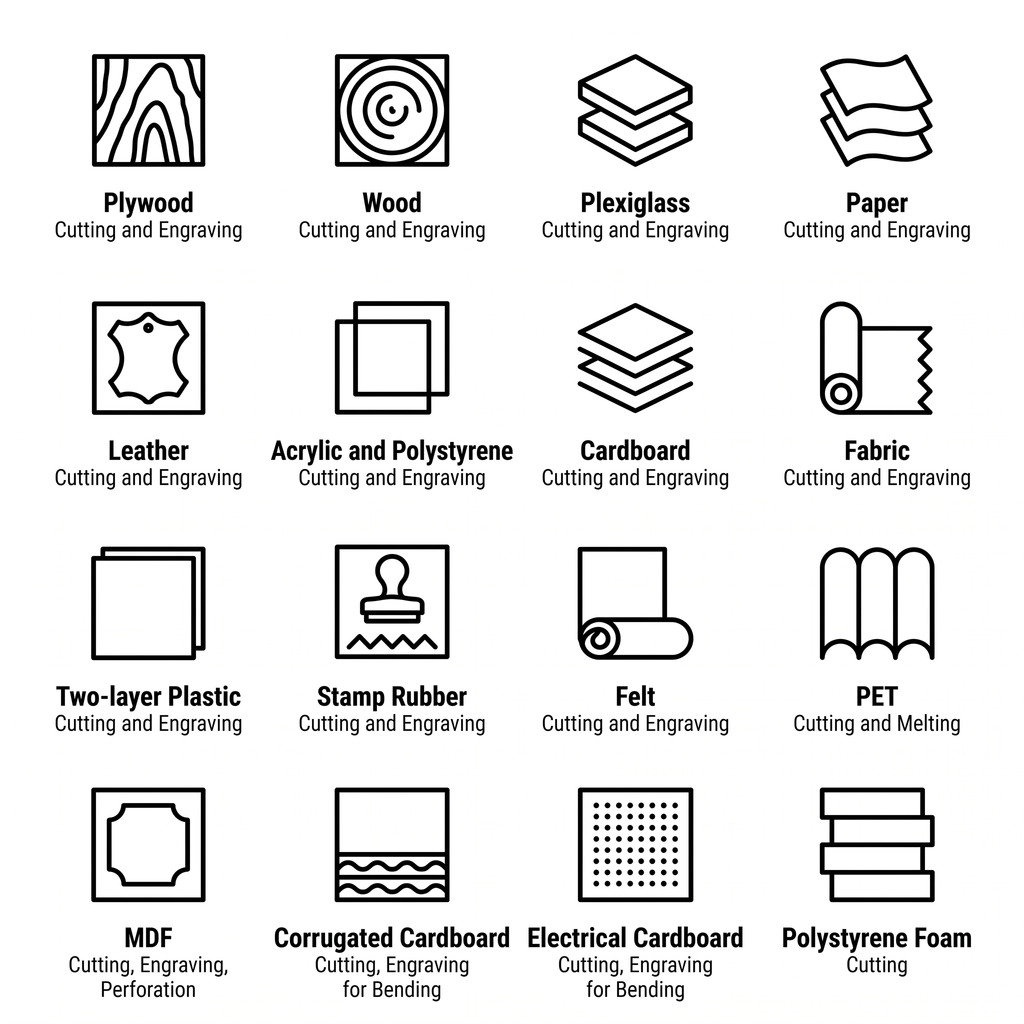
Common Materials for CO₂ Laser Cutting
Plywood
Plywood is popular for boxes, toys, ornaments, and models. 3 mm and nominal 1/8-inch plywood are common starting choices, but they are not exactly the same thickness.
Choose laser-suitable plywood with consistent layers and minimal voids. Glue and internal defects can cause incomplete cuts. Measure your sheet before cutting parts with fitted joints.
Wood and Veneer
Solid wood and veneer can be cut and engraved. Thin basswood and poplar are useful options for craft projects. Denser woods generally require more cutting energy, while knots and resin can make results uneven.
Expect brown or darkened cut edges.
MDF
Laser-suitable MDF provides a smooth surface and has no wood grain. It is useful for models, signs, and decorative projects, but produces substantial smoke and dark cut edges. Its density and binders affect cutting performance.
Acrylic
Acrylic—also called PMMA—is a popular choice for signs, ornaments, and display components. CO₂ lasers can cut both clear and colored acrylic.
Cast acrylic usually produces a frosted-looking engraving, while extruded acrylic often gives a more transparent engraved result. Do not confuse acrylic with other clear plastics.
Paper and Cardboard
These materials are useful for stencils, packaging prototypes, and architectural models. Keep sheets flat and cut one layer at a time. Paper and cardboard can ignite quickly.
Leather
Suitable vegetable-tanned leather can be cut and engraved for tags, accessories, and craft projects. Confirm the tanning method and any surface treatments with the supplier.
Avoid chrome-tanned leather and unidentified faux leather, which may contain PVC.
Fabric and Felt
Some cotton, polyester, and felt products can be laser-cut. Results depend on fiber composition: natural fibers may darken, while synthetic fibers may melt at the edges. Check coatings and backing materials before use.
What Should You Not Cut?
Never laser-cut PVC, vinyl, PTFE, or unidentified plastics. They can release hazardous fumes; some can also damage your machine.
Avoid unknown foams, treated wood, and materials with unverified coatings or adhesives. Check supplier guidance and the Safety Data Sheet (SDS); an SDS alone does not establish laser compatibility.
Glass, stone, and ceramics are generally engraving materials, not cutting materials for typical desktop CO₂ machines. Ordinary hobby CO₂ lasers are not metal-cutting machines.
Basic Safety Rules
- Never leave an operating laser unattended.
- Use effective exhaust or manufacturer-approved filtration.
- Keep the enclosure closed and safety interlocks working.
- Keep the cutting bed free of scraps and residue.
- Follow cooling and air-assist requirements.
- Keep an appropriate fire extinguisher nearby and know how to stop the machine.
Start with a small material test, then try one of our free laser-cut projects.